
Balance Transfer Strategies for Efficient Debt Management
Managing complex financial portfolios requires a nuanced understanding of how high-interest liabilities impact long-term capital preservation. Utilizing a Balance Transfer serves as a strategic maneuver to shift high-interest debt from one revolving credit line to another with a significantly lower rate. I have observed that this mechanism allows for a calculated restructuring of personal balance sheets.
It is essential to clarify that this process is not a form of debt forgiveness or a permanent reduction of the principal balance owed. Instead, it functions as a liquidity management tool designed to provide a temporary window of zero or low interest. This distinction is vital for those who view credit maneuvers as a tactical bridge rather than a total solution.
Many professionals assume these offers are universally beneficial without considering fee structures or the impact on credit utilization ratios. They often overlook the fact that a misstep in timing or repayment can lead to deferred interest penalties that negate previous gains. Therefore, one must approach these tools with a rigorous mathematical framework and a clear exit strategy.
This guide explores the technical parameters of transferring liabilities to ensure you maximize your fiscal efficiency. I will break down the variables that dictate success, ranging from fee analysis to the psychological discipline required for effective deleveraging. Let us examine how to turn these financial instruments into a powerful advantage for your long-term wealth.
How does a Balance Transfer impact a professional financial plan?
Integrating a debt migration strategy into a broader financial plan requires a deep analysis of the internal rate of return on your available capital. When you move high-interest debt to a lower-cost vehicle, you essentially free up cash flow that would otherwise be consumed by compounding interest. Consequently, this redirected capital can be utilized for higher-yield investments or accelerated principal reduction.
I often argue that the primary benefit of a credit shift is the reduction of the weighted average cost of debt across your entire portfolio. By isolating high-cost liabilities, you create a controlled environment where repayment becomes more predictable and less influenced by market volatility. Thus, the strategy serves as a hedge against rising interest rates in the revolving credit sector.
However, the temporary nature of these promotional rates demands a strict repayment schedule before the introductory period expires. If you fail to liquidate the balance within the allotted timeframe, the remaining principal may be subjected to standard purchase rates that exceed your original costs. In this context, discipline remains the most critical variable in the economic equation of capital management.
Beyond interest savings, this move can simplify the operational side of managing personal accounts by consolidating multiple payments. This reduction in administrative complexity decreases the risk of missed payments and subsequent late fees. I find that a streamlined balance sheet is less prone to the errors that typically plague fragmented financial structures, allowing for better focus on long-term goals.
Analyzing the cost of transfer fees
One must perform a comprehensive cost-benefit analysis by comparing the upfront transfer fee against the projected interest savings. Most institutions charge a percentage of the total amount moved, which typically ranges from three to five percent depending on the issuer. I recommend using a net-present-value approach to determine if the immediate cost justifies the future interest avoidance.
Furthermore, these fees are often added to the principal balance, which can slightly increase your debt-to-income ratio in the short term. While this may seem negligible, for a highly leveraged individual, it could impact future borrowing capacity. Therefore, calculating the exact break-even point in months is a mandatory step before proceeding with any application for a Balance Transfer.
Strategic debt consolidation outcomes
Consolidation through a credit shift often results in a temporary dip in the credit score due to a new hard inquiry. However, as the user pays down the concentrated balance, the improvement in the credit utilization ratio generally leads to a significant long-term score recovery. I view this as a necessary trade-off for obtaining a lower cost of capital and better structure.
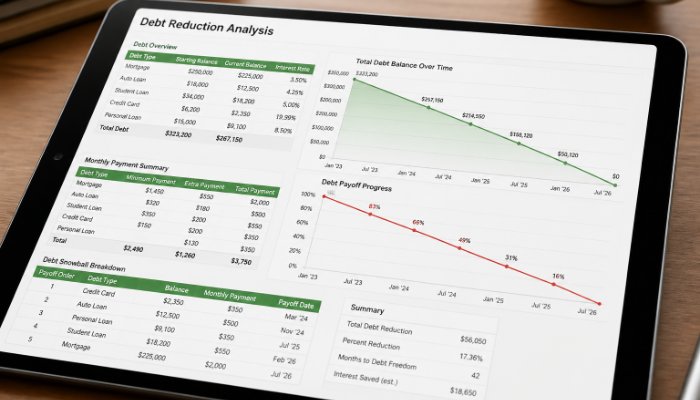
In a practical sense, moving twenty thousand dollars in debt spread across four high-interest accounts to a single low-rate vehicle eliminates the need to track multiple due dates. This structural change allows the individual to focus all surplus liquidity onto a single, clear objective. Moreover, the successful execution of this strategy requires a commitment to stop accruing new debt on the original cards.
Why is the timing of a Balance Transfer critical for success?
The effectiveness of migrating credit balances is heavily dependent on the duration of the 0% APR window offered by the new creditor. Most premium products provide a timeframe between twelve and twenty-one months, which dictates the required monthly payment to reach zero. Therefore, late entry into a transfer agreement can drastically reduce the utility of the interest-free period.
Maximizing the introductory period
Evaluating market trends in credit
Is it worth using a Balance Transfer for small debts?
Determining the utility of a credit migration for smaller amounts requires a different analytical lens than large-scale debt restructuring. When the balance is low, the administrative effort and the impact of a hard credit pull may outweigh the actual dollar amount saved in interest. Therefore, I typically suggest that a threshold of several thousand dollars be met before considering a formal transfer.
However, if the interest rate on the existing small debt is extremely high, such as with retail store cards, even a small transfer can yield sensible results. Besides the money saved, the move can also serve as a tool to clean up a messy credit report by closing out subprime accounts. I have seen individuals use this method to successfully consolidate small, high-rate accounts into one manageable line.
If the user is planning to apply for a major loan, such as a mortgage, in the near future, multiple small transfers could be counterproductive. The flurry of new account activity and changes in utilization might create red flags for conservative underwriters. Interrogating your short-term goals is therefore a prerequisite to any change in your revolving credit structure, regardless of the debt size.
On the other hand, the psychological relief of consolidating several small annoyances into one single task cannot be ignored. In my view, the reduction of mental load is often worth a small transfer fee, provided the strategy is executed with precision. Efficiency in financial management is as much about cognitive overhead as it is about the raw numbers on the page.
Identifying the break-even point
The break-even point for small transfers is found where the cost of the fee equals the interest that would have been paid over the same period. For a small debt, a 5% fee represents an upfront cost that may take months of interest savings to recover. I believe that if the recovery time is longer than half of the promotional period, the move is likely not worth the effort.
Furthermore, one must account for the opportunity cost of the time spent researching and managing the new account. For a busy professional, these hours have an inherent value that must be weighed against the potential net savings. I often find that for very small debts, a more aggressive repayment schedule on the original card is the more efficient path to follow.
Comparing alternatives to credit migration
Before committing to a new credit account, it is wise to consider if a personal loan might offer better long-term terms. While these options usually involve interest, they often provide fixed repayment schedules and longer durations than a revolving card. I often suggest these alternatives for individuals with debt amounts that exceed the typical credit limits of 0% APR cards.
Another alternative is the simple negotiation of a lower rate with your current creditor, which requires no new applications or fees. While banks are not always willing to lower rates, a cardholder with a long history and good a payment record may have leverage. Directly applying extra cash from budget cuts toward the highest-interest balance—the avalanche method—is another robust strategy worth considering.
Final Perspective
Selecting the right tools for debt management is a hallmark of sophisticated financial planning and requires a balance of technical knowledge and personal discipline. A strategic transfer can act as a bridge to a debt-free future, provided you remain vigilant about fees and the expiration of promotional windows. By integrating these tactics into a broader investment and repayment strategy, you ensure that your capital is always working for your benefit rather than for the bank. Focus on the math, stay consistent with your payments, and use these institutional offerings to your long-term advantage.
